What changed when we took the mirrors down
Less checking, more feeling. Nobody has asked for them back.
The room came with mirrors. Two full walls of them, floor to ceiling, left behind by the dance school that had the space before us. When we took the lease, everyone told me to keep them. Mirrors make a small room look big, and a room with eight mats in it is a small room.
We kept them for four months. Then there was a Tuesday morning class in which I watched a woman in the front row check her own reflection eleven times during a five-breath hold. I stopped counting because it was making me sad. The following Sunday two friends helped me take the glass down. Underneath was plaster the colour of weak tea, which we painted, and the oak floor took a scratch we never fixed.
What mirrors are actually for
They are a teaching tool for a teacher who cannot reach everybody. In a room of forty, a mirror lets people correct themselves. That is a real use and I am not against it in principle.
Eight mats is not forty. I can reach every person in this room in about six seconds. I do not need you to check your own shoulder, because I am standing next to your shoulder. What the mirror was doing in here was not teaching. It was auditing.
In Mysore I practised for months in a room with nothing to look at but the floor and the heels of the person in front of me. Nobody explained this as a philosophy; it was simply a room. What I noticed when I came back to European studios was how much of the hour I spent watching myself, and how odd that would look in any other context. Nobody plays an instrument in front of a mirror. Nobody cooks dinner in front of one.
A mirror answers a question you should be asking your own leg.
What changed
Balances got worse for about three weeks, then better than before. This surprised me until it stopped surprising me. A mirror gives you a fixed visual anchor, and when it goes, people have to find the balance somewhere in the body instead of on the wall. Tree pose was a shambles in March and steady by May, and it is steady now with the eyes closed, which is the honest test.
People stopped arranging themselves. There is a particular half-second adjustment — the chin lift, the tug at the hem — that used to happen constantly and now does not happen at all. I never asked for that. It went with the glass.
The front row filled up. That is the change I would not have predicted. With mirrors, nobody wants the front, because the front is the most visible place in an already visible room. Without them the front is just the spot nearest the window, and it goes first now.
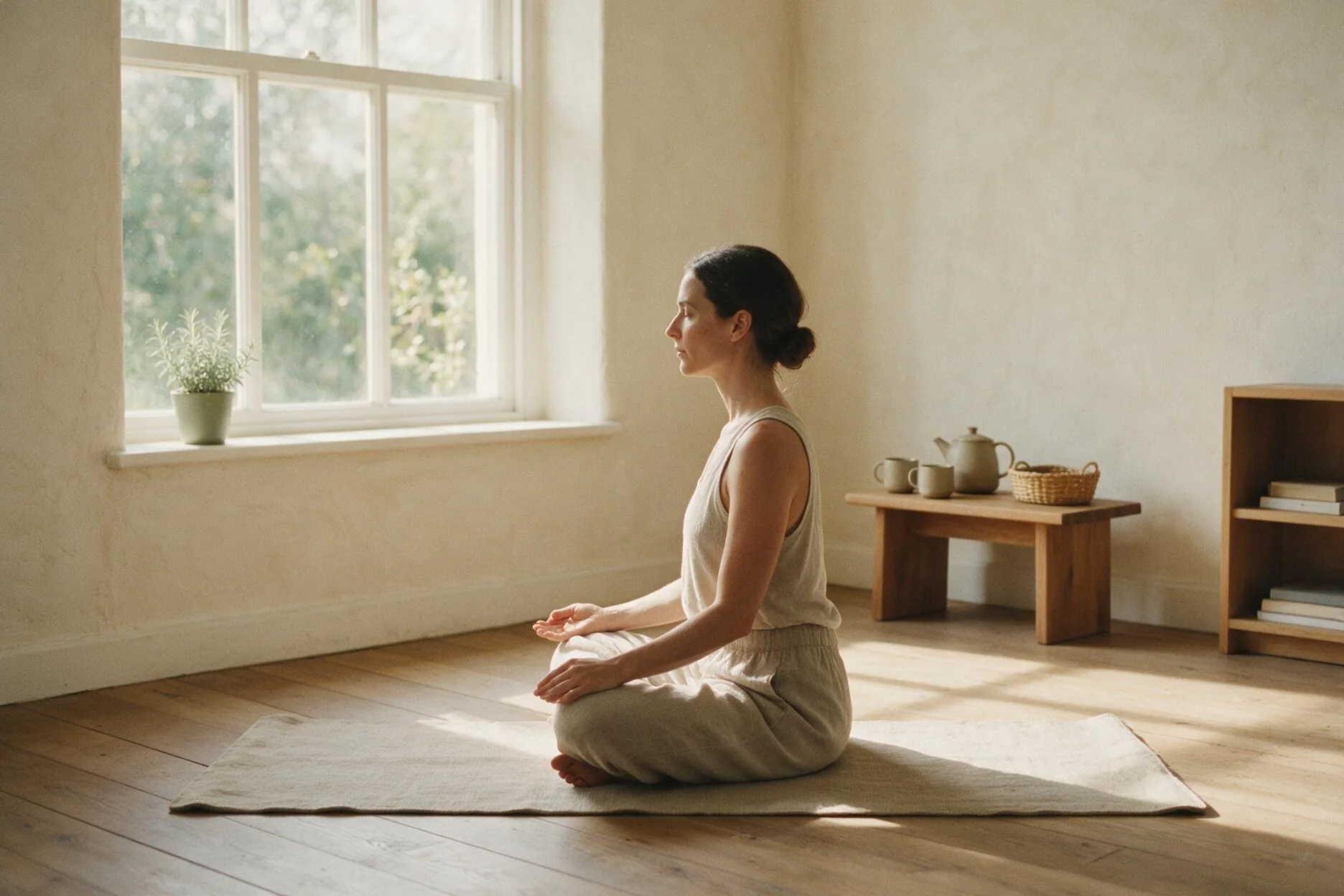
And the light is better. Two walls of mirror throw hard morning glare straight back across the floor; plaster takes it in. The room at eight in the morning is warmer and quieter to be in than it was, and that is worth more than the illusion of a few extra square metres.
What we lost is real, and I will say it plainly. The room is visibly smaller. One or two people who came for a workout-shaped class went elsewhere, and that is fair. A few people missed being able to see the demonstration from the back, so I demonstrate in the middle of the floor now and turn twice, which is better teaching anyway.
It has been two years. Less checking, more feeling. Nobody has asked for them back.
Keep reading