Why every class here ends with ten minutes of nothing
Savasana is not the reward for the work. It is where the work lands.
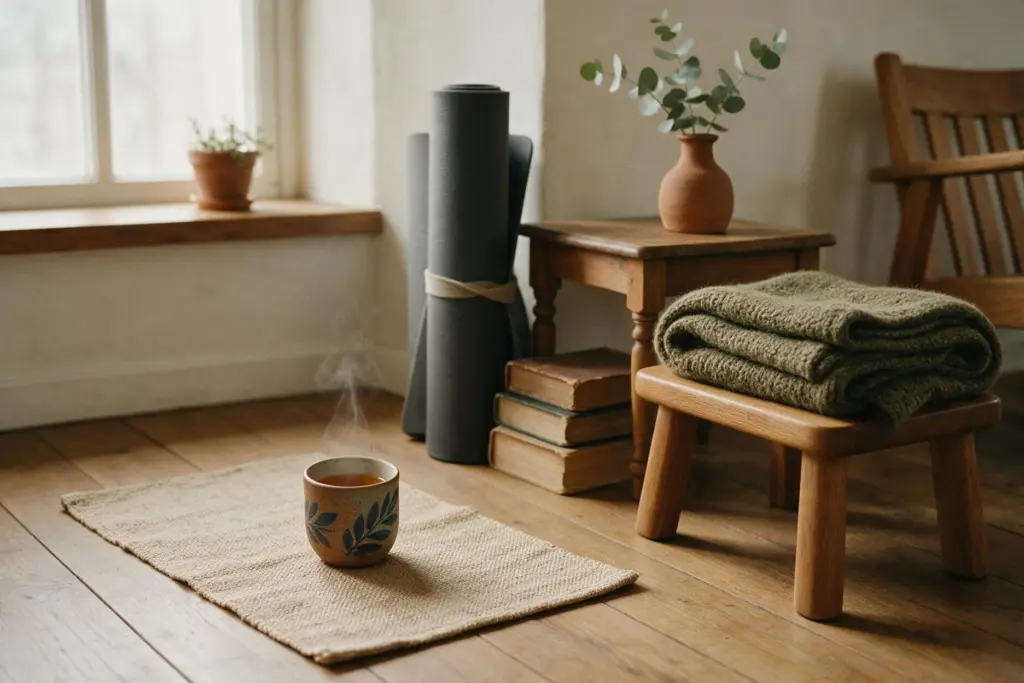
Most people arrive at the studio with a plan for the hour. Get stronger, get looser, sweat a little, feel better. The plan rarely includes lying still on the floor for ten minutes with your eyes closed, and yet that is how every class here ends, and it is the part I would fight hardest to keep.
Savasana, corpse pose, is the only posture in the sequence that asks for nothing. No alignment to hold, no breath to count. The nervous system has spent seventy minutes being asked to do things. Now it is asked to stop, and the first thing it usually does is complain.
The complaint is the practice
The itch, the list of things to do after class, the urge to check the time: these are not interruptions to the rest. They are the material. Noticing them and choosing to stay is the exact skill the rest of the practice was building toward. It is the same skill you will need at three in the morning, or in a waiting room, or in a difficult conversation.
If you leave before savasana, you have done the exercise and skipped the yoga.
There is also a plainer reason. Movement creates heat and stimulation; rest is where the body integrates it. Blood pressure settles, breathing lengthens, the muscles that were working learn what it feels like to stop. Ten minutes is roughly how long that takes. Five is a gesture. Ten is a change.
How to do nothing, well
Take a blanket even if you are warm; the body cools fast once it stops moving. Let the feet fall open. Let the hands fall open. If your lower back complains, put a bolster under the knees. Then do the hard part, which is nothing, and keep doing it until you hear the bowl.
You will not get it right. That is the point of practising.
Keep reading